
Why Does DFW Office Get Lumped in With the National “Office Is Dead” Story?
Texas markets — Austin, Houston, and Dallas — posted the highest office vacancy rates in the entire Southern U.S. in May 2026, according to Yardi’s latest national office report. Pull that one statistic, and you have a clean, simple narrative: Texas office is struggling. The problem is that the same report, in the same month, shows Dallas leading the entire South in year-to-date office sales volume — and sitting alongside Boston and Manhattan as one of only three U.S. markets with more than 2 million square feet of office space actively under construction. Those two facts don’t fit in the same headline. They both belong in the same market.
That’s the gap we want to address directly: the noise is the vacancy rate treated as a verdict. The signal is what capital is actually doing — where it’s buying, where it’s building, and where it’s willing to lend. In DFW office right now, those three things point in a different direction than the topline number suggests.
Why Is DFW Office Vacancy High Even Though the Market is Strong?
Vacancy rate is the easiest office statistic to report and the easiest to misread. It’s a single number that blends everything — a 1980s tower in a soft corridor and a fully amenitized Class A building in a tight submarket get averaged into the same figure. National coverage tends to lead with that blended number because it’s simple, comparable across markets, and fits a familiar narrative arc. It also tends to be the figure that travels furthest from the underlying report, stripped of the regional and submarket detail that gives it meaning.
DFW isn’t unique in this respect, but it’s a particularly clear example. A market-wide vacancy figure in the low-to-mid 20s percent range looks like distress on its face. It says nothing about where that vacancy is concentrated, what’s happening to rents in the submarkets that matter, or what investors and developers are actually doing with their own capital. That’s the noise. It’s accurate as a number and incomplete as a story.
What Capital Activity Shows About the DFW Office Market in 2026
The recurring mistake in national office coverage isn’t bad data — most of it is sourced from the same research firms we cite. It’s treating a metro as a single asset. A story framed around “office is dead” or “office is recovering” needs one number to anchor the headline, and vacancy rate is the most available one. That framing works for a story. It doesn’t work for an underwriting decision.
The same dynamic shows up nationally, not just in Texas. Gateway markets get credited with a recovery story when their trophy towers lease up, even while older product in the same city sits empty. Sun Belt markets get written off when their metro-wide vacancy ticks up, even while specific corridors post record rents and absorption. The pattern is consistent: the headline number is real, and it’s also the wrong unit of analysis for anyone actually trying to finance a building.
What Does DFW Office Investment Activity Actually Show?
Capital tends to be a more honest narrator than a headline, because it has consequences attached to it. Three data points from the same June 2026 Yardi report stand out:
- Dallas posted the highest year-to-date office sales total in the entire Southern U.S. through May 2026 — nearly $1.4 billion in transactions, ahead of Washington, D.C. and Miami.
- Dallas, Boston, and Manhattan were the only three U.S. office markets with more than 2 million square feet of new office space actively under construction in May 2026 — hardly a list of markets developers are writing off.
- Texas markets carried more than half of the entire Southern U.S. office construction pipeline that month, accounting for nearly 17% of the national pipeline.
Investors don’t close $1.4 billion in transactions, and developers don’t break ground on millions of square feet, in a market they believe is dying. That level of capital commitment is itself a data point — arguably a more reliable one than a blended vacancy statistic, because it reflects what sophisticated buyers and builders are willing to put real money behind.
This isn’t a new pattern for DFW specifically. Within the metroplex, the Uptown/Turtle Creek submarket has carried the highest average office rents in the region, with gross rents averaging $60.88 per square foot in Partners Real Estate’s Q3 2025 quarterly report — and held 51% of the entire DFW office construction pipeline that quarter. New supply concentrating in the strongest-performing corridor, even as the metro-wide vacancy number sits elevated, is exactly the kind of divergence that a single headline statistic can’t capture.
How Did HALL Structured Finance Underwrite the Uptown Tower Office Loan?
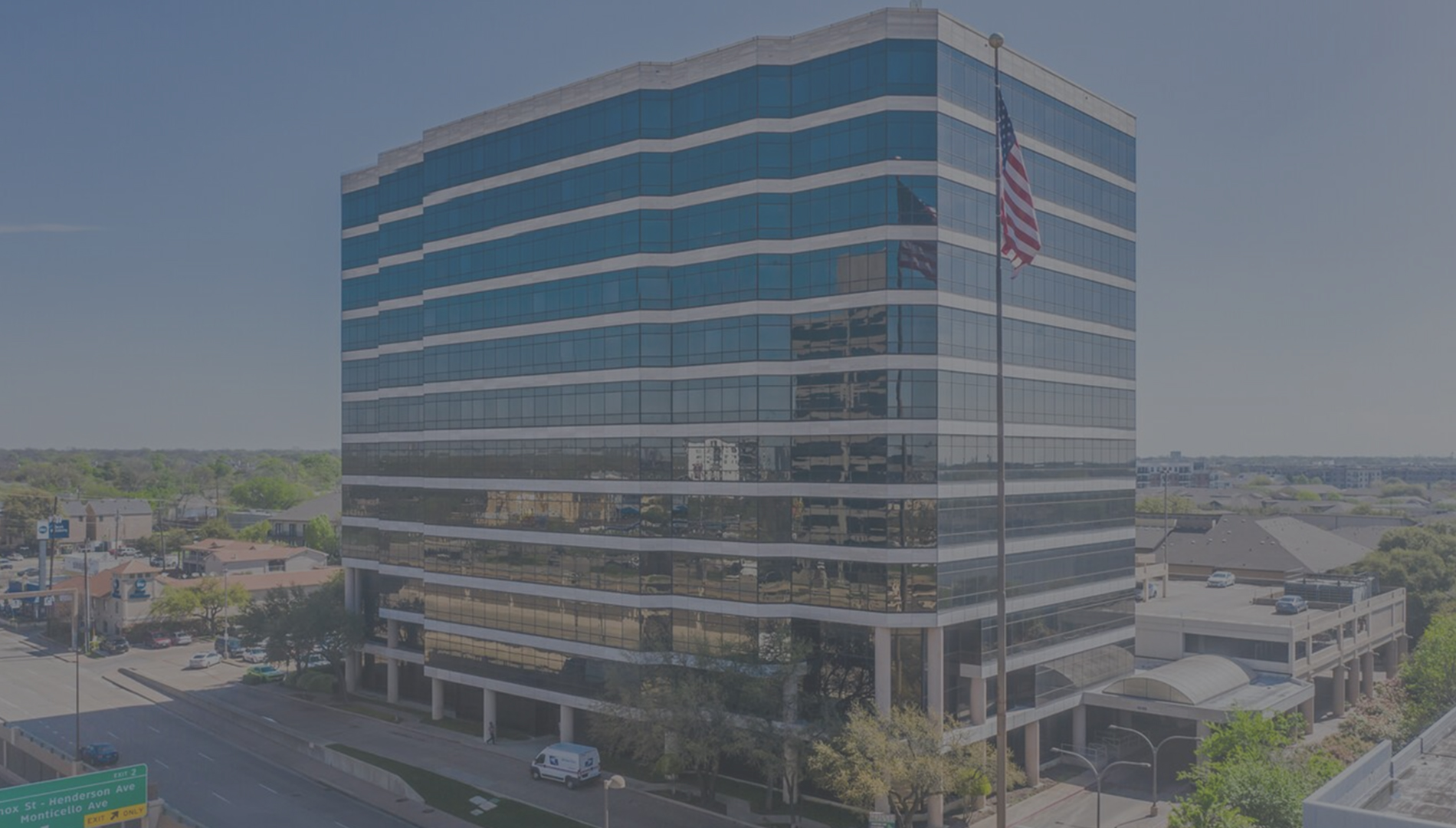
We’ve underwritten to this distinction directly. Our $30.8 million acquisition bridge loan on Uptown Tower closed in a submarket-specific corridor — Knox-Henderson, adjacent to Uptown — where conventional lenders had broadly stepped back from office regardless of the underlying fundamentals. We underwrote the deal on location quality, sponsor execution capability, and a defined renovation plan, not on a market-wide vacancy figure that would have told us nothing useful about that specific building.
Our founder and CEO, Craig Hall, has been direct about the thinking behind that approach. As he told CoStar News, the broader market has been capital-constrained, and many lenders have stayed on the sidelines — understandably, given how many office deals don’t fit a conventional credit box. “I wouldn’t say that all office is coming back,” Hall said, “but I do think well-located properties that have good amenities are absolutely going to be … in really good shape” over the next two to three years. That’s a selective thesis, not a blanket call — and it’s the same distinction the sales and construction data are making.
What Should Office Sponsors Watch Instead of the Vacancy Rate?
If you’re evaluating an office opportunity in DFW, the metro-wide vacancy rate is the least useful number on the page. A few that matter more:
- Submarket-level absorption and rent trends, not market-wide averages. A building’s performance is determined by its corridor, not the metro.
- Where construction is actually happening. Capital doesn’t break ground in corridors it expects to underperform — the pipeline tells you where developers have already made their bet.
- Sales volume and pricing in the specific submarket, which reflect what buyers are actually willing to pay today, not what a blended cap-rate assumption implies.
- Whether a lender is underwriting the building or the headline. A lender working from a market-wide vacancy figure will decline deals that a lender working from submarket fundamentals will close.
Why is HALL Structured Finance Investing $500 Million in Texas Office?
We’re targeting $500 million or more in Texas office investment over the next two years, focused on value-add repositioning and ground-up development, with Dallas-Fort Worth expected to account for a meaningful share of that commitment. That number reflects a read of the data, not a bet against it. The sales volume, the construction activity, and the submarket-level rent performance all point the same direction: capital is already voting on DFW office with real dollars. The metro-wide vacancy rate is the one figure in the entire data set that hasn’t caught up to what the rest of the market is doing.
We’re not arguing that all office is recovering, in DFW or anywhere else. Buildings in the wrong location, without a credible plan, are still hard deals to finance for good reason. The argument is narrower and, we think, better supported: treating DFW office as a single, uniform story — distressed because one number says so — means missing what the sales ledger and the construction cranes are already showing.
Looking to Finance an Office Deal in DFW?
If you’re evaluating an office acquisition, repositioning, or ground-up development in Dallas-Fort Worth, we’d rather talk about the specific submarket and the specific deal than debate a metro-wide statistic. Learn more about our approach on our Commercial Office Financing in Dallas–Fort Worth page, or get in touch directly to discuss your project.
Contact our team to talk through your deal.
Back To News Room
News Room
Related Articles
Scroll to explore related Articles from HALL Structured Finance team