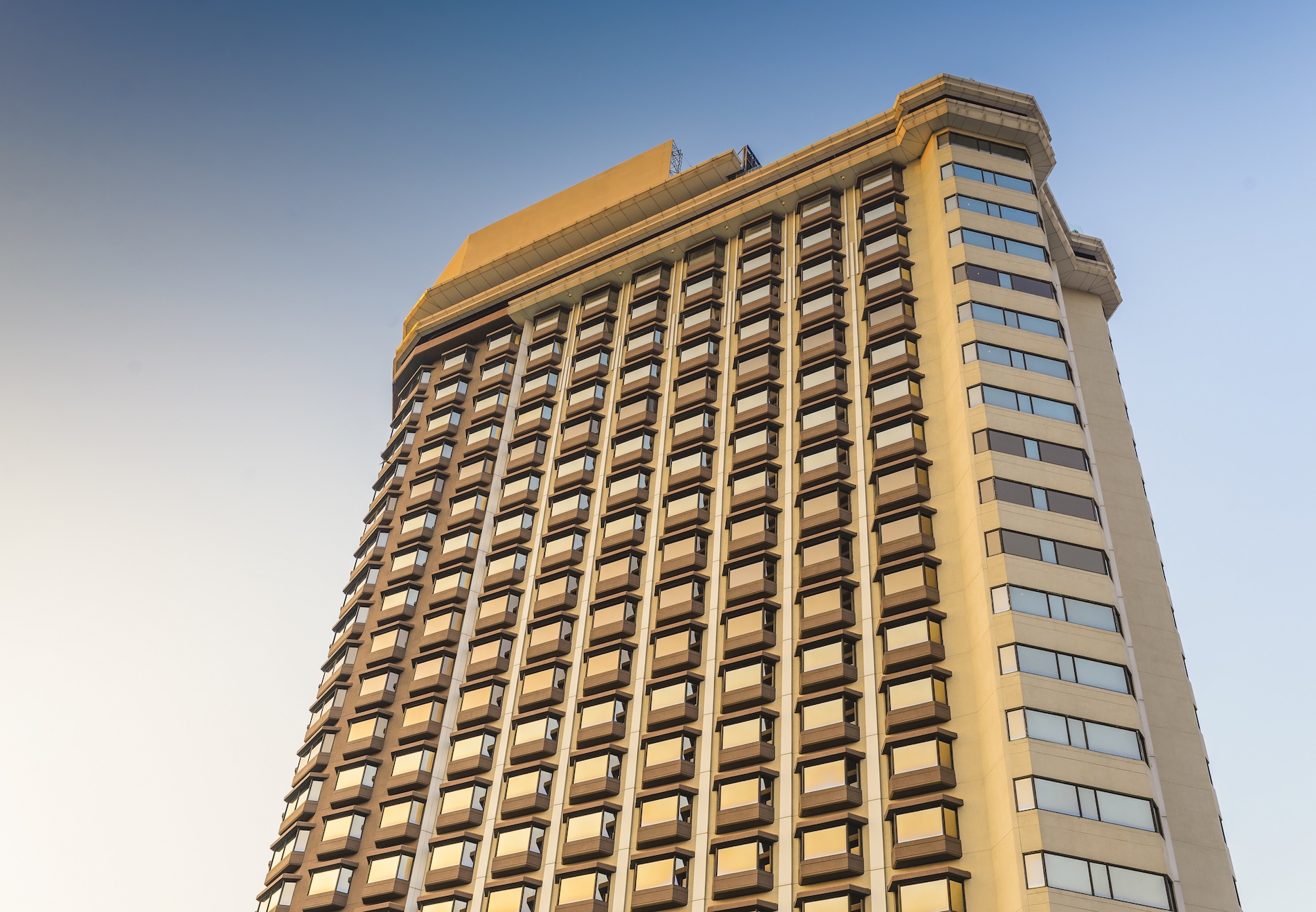

The national narrative on office real estate hasn’t been kind. Headlines from New York, San Francisco, and Chicago tell a story of emptied towers, distressed debt, and a market that may never fully recover. But if you’re watching Dallas — specifically the submarkets where private capital is deploying — a very different story is unfolding.
DFW office isn’t just surviving. In the submarkets that matter most to institutional and private lenders, it’s quietly one of the strongest office stories in the country. Here’s what the data is actually showing, and what it means for developers and sponsors to evaluate their next move.
The Headline Numbers Don’t Tell the Full Story
The overall DFW office vacancy rate sits around 25%, a figure that looks alarming on its face. But that number is carrying a lot of weight — much of it from downtown Dallas, suburban Class B inventory, and legacy space that was functionally obsolete before the pandemic.
Strip out the noise and focus on where tenants are signing leases, and the picture sharpens considerably.
According to JLL’s Q1 2026 Dallas office report, the Dallas office market recorded 332,300 square feet of positive absorption in Q1 2026, driven by large tenant move-ins and expansions across select submarkets. More tellingly, rent growth among pre-eminent assets is described as “robust” — and the numbers back that up.
Uptown’s average direct asking rent currently sits at $70.47 per square foot. Preston Center is commanding $62.45 per square foot. Both figures represent the two highest submarket averages in the entire Dallas area — by a significant margin. The broader DFW market average is $33.84 per square foot, per Savills Q1 2026. That spread tells you everything about where tenants want to be and what they’re willing to pay to get there.
Three Submarkets Leading the Recovery
Uptown
Uptown is the clearest proof point that flight-to-quality is a real, durable demand driver — not a talking point. The submarket’s availability rate of 23.8% sits well below the DFW regional rate of 27.5%, per Savills Q1 2026.
The Cousins Properties acquisition of The Link at Uptown — a 25-story, 94%-leased trophy tower — closed at $281 million, or $747 per square foot. That’s not distressed pricing. That’s institutional conviction. The New York Stock Exchange recently signed a lease in the submarket. Sidley Austin LLP moved into 118,000 square feet at 23Springs. And Goldman Sachs is under construction on an 800,000-square-foot, $500 million campus just north of downtown that will serve as the firm’s second-largest global office hub when it opens in 2028.
This is the submarket where we’ve been actively deploying capital. Our financing of Uptown Tower — a full redevelopment of a Class A asset in the heart of this submarket — reflected our conviction in exactly this thesis: the right asset, in the right location, with a sponsor who understood the opportunity.
Preston Center
Preston Center is arguably the tightest office submarket in all DFW. Availability there stands at just 5.9%, according to Savills — a figure that would be considered healthy in any market, in any cycle.
That scarcity is attracting serious new development. Ramrock Real Estate and Lincoln Property Company broke ground in early 2026 on 8300 Douglas, a 12-story, 300,000-square-foot Class AA office tower. The development team reports being “overwhelmed with interest” from Fortune 100 companies. Separately, Shorenstein Investment Advisers acquired Sterling Plaza at 5949 Sherry Lane for its second major Dallas office investment in under a year. When institutional money keeps returning to a submarket, that’s signal, not noise.
Legacy West / Frisco Corridor
The Legacy West and North Dallas Tollway corridor continues to draw major corporate tenants. KFC took 147,000 square feet at 7100 Corporate Drive in Plano during Q1 2026. The Cigna Group absorbed 105,000 square feet at Sixteen Forty in Plano. Speculative office development is even returning, with a new tower breaking ground at Hall Park in Frisco — notable at a time when spec construction has effectively disappeared in most U.S. markets.
What’s Actually Driving Demand
Corporate Relocations and Expansions
For the seventh consecutive year, DFW ranks as the number one metro in America for corporate headquarters relocations, according to CBRE. Labor availability has surged as the primary relocation driver, meaning companies are choosing DFW for its deep, diverse workforce across finance, healthcare, technology, and professional services. That pipeline is what’s filling Class A space in Uptown and Preston Center.
Return-to-Office Has a Texas Accent
Dallas has consistently ranked among the highest office utilization metros in the country. Texas broadly — and DFW specifically — never fully embraced remote-first culture the way coastal markets did. The practical result: occupancy rates in the highest-quality buildings have recovered meaningfully faster here than in gateway markets.
Flight to Quality Is a Structural Shift, Not a Trend
The bifurcation between Class A and Class B/C office isn’t going to reverse. Tenants have spent five years figuring out exactly what they need from physical office space — and the answer is consistently: less space, but better space. That means premium locations, modern amenities, efficient floorplates, and buildings that give employees a reason to show up.
As Bradford Companies’ CEO Kevin Santaularia noted to CoStar Analytics, front-facing buildings in proximity to affluent neighborhoods and strong retail trade areas are “in a solid position to see escalating rates.” The best buildings are getting better; the commodity space is getting left behind.
Why the National Office Narrative Doesn’t Apply to DFW
The critique of DFW office typically leads with the overall vacancy rate and stops there. That’s an incomplete analysis. Downtown Dallas does have a vacancy problem — CoStar data from 2025 showed it ranked second-highest among major city centers nationally. That’s real. But downtown Dallas is not Uptown. It’s not Preston Center. It’s not Legacy West. Treating DFW office as a monolithic market is a fundamental misread.
The second mistake is conflating national office distress with Texas office fundamentals. DFW ranked second only to Houston in U.S. population growth in 2025, according to JLL. That demographic tailwind doesn’t disappear.
The third mistake is assuming Class B distress contaminates Class A demand. It doesn’t. Class A properties in Dallas recorded 283,282 square feet of positive net absorption in Q1 2026 — even as Class B posted negative absorption of 493,481 square feet. The divergence couldn’t be clearer.
Where Private Capital Fits In
Banks have broadly pulled back from office lending. Most institutional lenders are still treating office as a monolithic category to avoid, which means the capital gap in even the highest-quality transactions is significant. That’s where private lenders with genuine market expertise can step in — not by ignoring risk, but by underwriting it correctly.
At Hall Structured Finance, we’ve committed $500 million to Texas office lending because we believe the data supports selective, quality-focused deployment. Our financing of Uptown Tower reflects the kind of deals we’re looking for: the right asset, the right submarket, a credible sponsor thesis, and a clear path to stabilization. We’re not lending on all office. We’re lending on the office that the data says wins.
What This Means for Sponsors
If you’re evaluating an office acquisition, repositioning, or ground-up development in DFW, a few things are worth keeping in mind.
Submarket selection is everything. The difference between Uptown and downtown Dallas isn’t just a few miles — it’s a completely different risk profile. Focus on where the data shows absorption.
Class A quality is non-negotiable. Tenants have made their preferences clear. If the asset requires material capital investment to achieve competitive quality, that scope and cost certainty need to be in place before approaching a lender.
Sponsorship quality matters more in this cycle. In a market where banks have retreated and lenders are being selective, the sponsor’s track record and market knowledge carry more weight than they did in an easy-credit environment.
The window is real but selective. The opportunity in DFW office exists today because most lenders are sitting on the sidelines. That window will narrow as more capital re-enters the market.
The Bottom Line
The DFW office market isn’t a single story — and that’s exactly the point. The national narrative of office distress is real in the markets where it’s real. But Uptown Dallas, Preston Center, and Legacy West are writing a different chapter: record rents, institutional investment, major corporate commitments, and a construction pipeline focused exclusively on the highest-quality product.
The data isn’t quiet about this anymore. The question is whether sponsors and their capital partners are reading it correctly. If you want the full picture on where DFW office is headed — submarket performance, capital flow trends, and where we see the clearest opportunity in 2026 and beyond — click here to access our DFW Office Market Outlook.
If you’re evaluating a DFW office deal and want to talk through how we underwrite in this environment, our team is actively deploying capital. Contact us if you are ready to begin the process.
Back To News Room
News Room
Related Articles
Scroll to explore related Articles from HALL Structured Finance team