
Financing a hotel construction loan in 2026 comes down to three underwriting questions: what brand is on the building, what that brand costs over the life of the loan, and how long the property takes to stabilize once it opens. Branded and independent hotels answer all three differently, which is why the brand decision shapes the loan itself — leverage, draw schedule, and when construction debt rolls into permanent financing.
Why does the brand decision come before the loan structure?
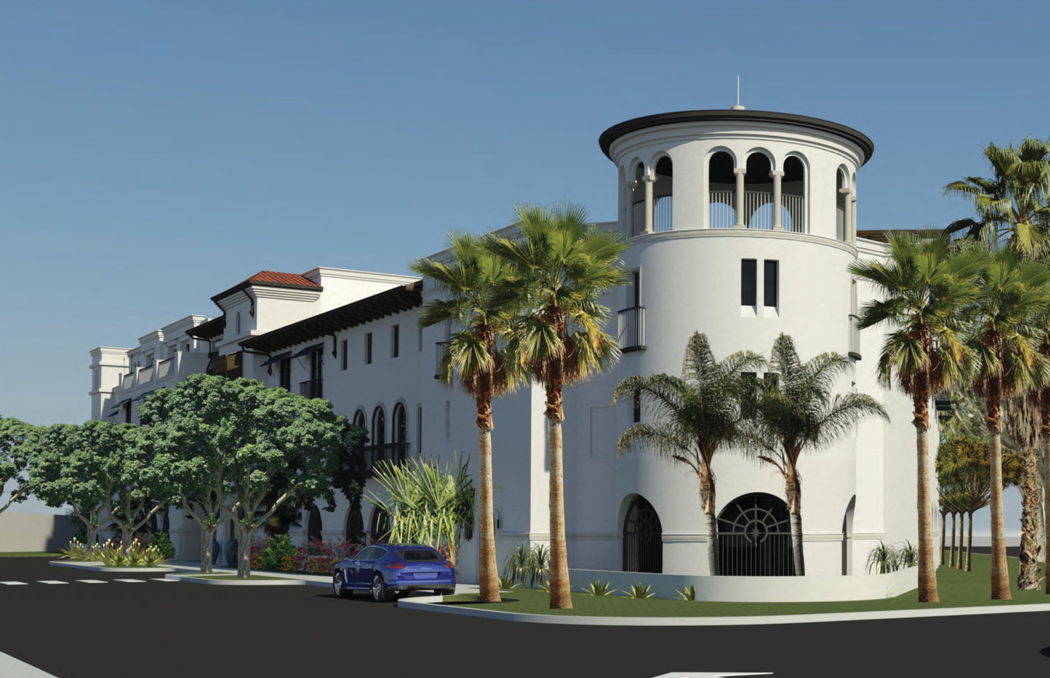
Most hotel construction lenders, HSF included, start underwriting with the brand. A recognized brand gives a lender something concrete to underwrite against: a loyalty program with tens of millions of members, a national reservation system, and brand standards tested across hundreds of properties. That’s why we finance hotels under major brands, including Hilton, Marriott, Hyatt, and IHG, as a matter of course, and why a strong brand can offset some of the risk in a new market or a first-time sponsor relationship. Soft brands split the difference, carrying a major hotel company’s distribution and loyalty system without the full design mandates of a traditional, hard-branded property — The Ballad Hotel in Clearwater, Florida, a Tapestry Collection by Hilton property, and Mtn Scout Truckee in North Lake Tahoe, a Tribute Portfolio by Marriott hotel, both use this structure.
Independent development remains a real option, but it shifts the underwriting burden onto the sponsor. Without a loyalty program or national sales force behind it, an independent hotel has to earn occupancy through location, design, or a concept travelers seek out directly. Compass by Margaritaville in Myrtle Beach, South Carolina, sits closer to this model, trading on a lifestyle brand’s following rather than a traditional hotel brand’s reservation system. Lenders will still finance strong independent deals; they just look harder at the sponsor’s plan and the market’s demand drivers, because there’s no brand standing behind the pro forma.
What franchise requirements should developers underwrite for?
Taking on a brand means signing a franchise agreement, and its costs aren’t static. Franchise-related fees — royalty, marketing and reservation assessments, loyalty contributions — rose 3.5% industry-wide between 2023 and 2024, outpacing room revenue growth of 2.7% (CBRE, August 2025). Growth isn’t even across chain scales either: luxury franchise fees grew 6.4% and upper-upscale fees grew 5.0%, while midscale fees declined 6.6% (CBRE, August 2025), a reminder that “the brand costs X percent of revenue” is rarely a useful shorthand.
Every branded hotel also comes with a Property Improvement Plan cycle: a schedule, set by the brand, for keeping the property at current design and technology standards. New construction is built to brand standards from day one, so the more immediate PIP cost shows up at acquisition and conversion rather than at ground-up development. Still, developers signing a franchise agreement today are committing to PIP compliance on the brand’s schedule for as long as they carry that brand, and that belongs in the long-term ownership plan, not just the construction budget.
How is the 2026 construction pipeline shaping brand decisions?
Construction volume overall has been soft. Rooms under construction nationally fell 5.4% year-over-year through March 2026, the fifteenth consecutive month of decline (CoStar/STR, April 2026). But that headline number hides real variation: the luxury pipeline hit a record 103 projects in the second quarter, up 12% year-over-year, and conversions, existing hotels rebranding rather than new ground-up construction, also set a record, at 1,567 projects and more than 152,000 rooms (Lodging Econometrics, July 2026). That conversion volume says something: when more pipeline activity is rebranding than building, brand economics are driving decisions as much as new supply is. Development costs help explain why. The median hotel development cost per room reached $213,000 in HVS’s 2026 survey (HVS, 2026), and it’s now roughly 71% more expensive to develop a full-service urban hotel than to acquire one outright (JLL, 2025).
How long does it actually take a new hotel to stabilize?
This is where the brand decision shows up most directly in loan performance. A widely cited STR analysis of hotel ramp-up patterns found that new construction reaches its full RevPAR index, meaning it performs in line with its competitive set, in about 17 months on average, ranging from 7 months in a market like Miami to 35 months in New York City (STR, 2019). Brand affiliation changes that curve: hotels converting from independent to branded operation move from roughly 68% to 99% occupancy index by month 33, slower than new construction, but proof of how much a brand’s reservation system and loyalty base contribute to filling rooms (STR, 2019).
It’s also why we structure hotel construction loans the way we do: draws tied to verified milestones, interest-only payments during the build, and a refinance into permanent financing once the property has roughly twelve months of stable operating history behind it. A brand doesn’t eliminate the ramp-up period, but it gives both sponsor and lender a more predictable one to underwrite.
What this means for developers financing hotel construction in 2026
The brand decision, the franchise cost stack, and the stabilization timeline aren’t three separate questions; they’re one conversation. A stronger brand can justify higher leverage and a more predictable path through construction, but its costs are rising faster than room revenue in most segments. An independent or lifestyle-branded project can avoid some of that fee stack, but it puts more weight on the sponsor’s track record and the market’s underlying demand.
We’ve closed hospitality deals across that spectrum recently, including The Ballad Hotel in Clearwater, Mtn Scout Truckee in North Lake Tahoe, Compass by Margaritaville in Myrtle Beach, and a Hotel Indigo in Fort Lauderdale — loans ranging from $40.89 million to $68.5 million, each underwritten around the same three questions: brand, cost, and stabilization.
We provide non-recourse first-lien construction loans and preferred equity from $20 million to $200 million, and we typically close in 60 to 90 days from application and deposit remittance. Considering a branded hotel construction loan in 2026? Our team is actively financing hospitality projects nationwide. Contact us to talk through your deal.
Back To News Room
News Room
Related Articles
Scroll to explore related Articles from HALL Structured Finance team