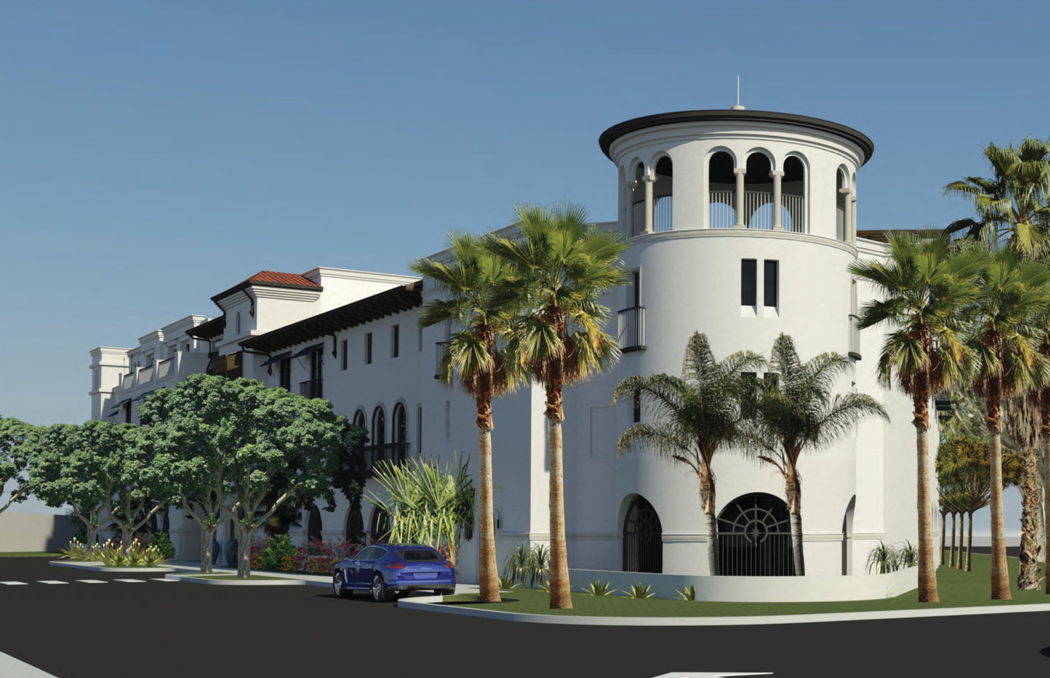


The choice between a bridge loan and a construction loan comes down to what the property needs. A bridge loan finances an existing building through a transition such as an acquisition, a lease-up or a repositioning. A construction loan finances a building that doesn’t exist yet and releases money in stages as it goes up.
Both are short-term, interest-only loans meant to be repaid or refinanced once the business plan is complete. But they’re underwritten differently, funded differently and carry different risks. Picking the wrong structure can cost a sponsor time, proceeds or both. Here’s how we think about each one, and how to tell which fits your project.
What is a commercial bridge loan?
A commercial bridge loan is short-term financing secured by an existing, income-producing (or partially income-producing) property. It “bridges” the gap between where the asset is today and where it will be once the business plan is done. At that point, the sponsor refinances into long-term debt or sells.
Sponsors use bridge loans to acquire under-leased or underperforming properties that a permanent lender won’t finance at current income, to fund value-add renovations that support higher rents, and to carry a property through lease-up after a recent completion or a large tenant departure. Bridge loans are also used to refinance a maturing loan when the property isn’t yet ready for permanent debt.
That last use has become more common. Seventeen percent of the $5.0 trillion in outstanding commercial and multifamily mortgages, or $875 billion, is scheduled to mature in 2026 (MBA, February 2026). Not every one of those properties can refinance into permanent debt on day one. For a sponsor with a credible plan, a bridge loan buys the time to execute it.
What is a construction loan?
A construction loan finances ground-up development, from site work to certificate of occupancy. There’s no in-place income to underwrite, so the lender underwrites the budget, the sponsor, the contractor and the project’s expected value once it’s built and stabilized.
Construction loans are sized to total project cost. At HSF, our construction loan program lends up to 80% loan-to-cost on multifamily and up to 75% on hospitality and other commercial projects. Terms run up to 36 months with extension options, and loans are non-recourse with standard carve-outs and completion guarantees.
The completion guarantee matters. On a bridge loan, the building already exists. On a construction loan, the biggest risk is that it doesn’t get finished on time or on budget, so lenders want the sponsor to stand behind completion.
How do bridge loans and construction loans compare side by side?
The simplest distinction is the asset itself. A bridge loan finances a building that exists; a construction loan finances one that will. Everything else follows from that.
Because a bridge property has some history, the lender underwrites current income, the business plan and the value once that plan is complete. The loan is usually sized to the purchase price plus renovation costs, measured against both as-is and as-stabilized value. A construction lender has no operating history to work from, so it underwrites the budget, the schedule, the contractor and the value at stabilization, and sizes the loan to total project cost.
The risks differ too. On a bridge loan, the main risk is execution: whether leasing, renovation and rent growth play out as planned. On a construction loan, it’s completion: cost overruns, delays and what the market looks like when the building delivers. Both loans are repaid the same way, through a refinance or a sale, though construction loans usually need a lease-up period before that exit is possible.
How are funds drawn on each loan?
This is where the two loans feel most different day to day.
On a bridge loan, the bulk of the proceeds fund at closing to cover the acquisition or refinance. Money for renovations is typically held in a reserve and released as work is completed and verified. The sponsor gets the capital it needs up front and draws the rest as the plan moves forward.
On a construction loan, very little funds at closing. In most construction loans, sponsor equity goes in first. After that, the lender funds monthly draws against an approved budget. Each draw request is supported by contractor invoices, an inspection confirming the work is in place, and lien waivers. Many construction loans also hold back retainage, a portion of each payment to the contractor, until the job is complete. An interest reserve is usually built into the budget to cover debt service while the building produces no income.
The draw process is often the most underestimated part of construction financing. A clean budget, an experienced general contractor and an organized draw package make the whole loan run more smoothly.
When does a bridge loan make more sense?
A bridge loan is usually the better fit when the building is standing and at least partly operational, and the value comes from leasing, repositioning or operational improvements rather than new square footage. It’s also the natural choice when a permanent lender won’t size a loan to today’s income but will once the plan is executed, or when speed matters, as it does on a competitive acquisition or a looming maturity.
Uptown Tower in Dallas is a good example. Bradford Companies acquired the 12-story, 253,981-square-foot office building at 4144 N. Central Expressway when it was about 54% leased. We provided a $30.8 million non-recourse, first-lien acquisition bridge loan that covered both the purchase and the renovation reserves, sized to a business plan aimed at Class A tenants. The full structure is in the Uptown Tower case study.
That deal also shows why we see bridge lending as a practical tool in the current office market. We’re active in office lending across Dallas–Fort Worth, backed by a $500M Texas office commitment, and much of that opportunity sits in existing buildings that need a plan and a lender willing to underwrite it.
When does a construction loan make more sense?
A construction loan is the right structure when you’re building from the ground up or adding significant new square footage or units to an existing site. It works best when market demand supports new supply, the budget and schedule are well defined, and the sponsor has the equity and track record to carry the project through delivery and lease-up.
Our construction lending focuses on hotel and multifamily projects nationwide. Recent closings in those sectors include hospitality deals in Clearwater, Myrtle Beach and Fort Lauderdale, and multifamily deals in Houston, Wisconsin and Colorado. In hospitality, the construction budget also has to account for brand standards and pre-opening costs. In multifamily, cost certainty and a realistic lease-up schedule carry the most weight.
What about projects that fall somewhere in between?
Some projects don’t fit neatly into either category. A gut renovation, a conversion to a new use or a major expansion of an operating property can look like a bridge loan on paper but behave like a construction loan in practice.
In those cases, the lender will usually underwrite the renovation the way it would a construction project, with a detailed budget, a qualified contractor, inspections and draws, while also giving credit for any income the property already produces. The label matters less than the structure. The key questions are how much money goes out at closing, how much is drawn over time and what has to happen before the loan can be repaid.
If your project sits in this gray area, it’s worth having that conversation with a lender early, before the budget and capital stack are locked.
How should you plan the exit on either loan?
Every bridge loan and construction loan is a means to an end. The exit, whether a refinance into permanent debt or a sale, should be underwritten at the start, not figured out in the last six months of the term.
On every deal, we start with what the property needs to look like at stabilization for a permanent lender to size a loan that repays ours. From there, we look at whether the timeline is realistic, including permits, construction, lease-up and a buffer for things that don’t go to plan. We also look at the extension terms. Extension options are common on both loan types, but they typically come with conditions, such as performance tests or fees, and sponsors should know them up front. Finally, we consider what happens if rates or values move between origination and exit.
A sponsor who has thought through these questions before the first call usually moves through underwriting faster.
What should you bring to the first conversation?
Whichever loan you’re considering, a productive first conversation starts with a clear business plan and timeline, a budget (with contractor bids or a GMP contract for construction), and the proposed capital stack, including sponsor equity. For an existing property, bring a current rent roll and operating statements. For any project, it helps to show your track record on comparable deals.
With that in hand, our typical close time is 60–90 days from application and deposit remittance.
Weighing a bridge loan or construction loan for your next project? We lend $20 million to $200 million on hotel, multifamily, office and other commercial projects nationwide. Contact our team to talk through your deal.
Back To News Room
News Room
Related Articles
Scroll to explore related Articles from HALL Structured Finance team